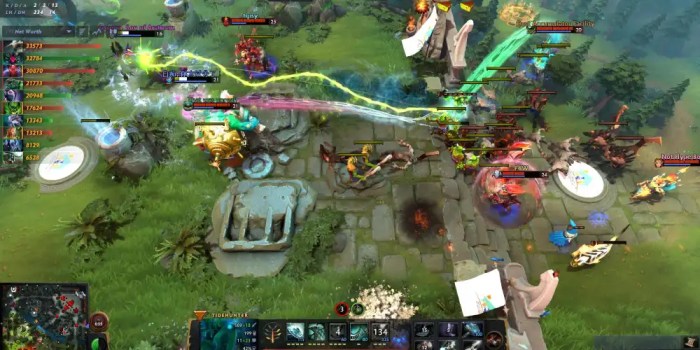
Dota 2 esports tournaments have become a cornerstone of the gaming community, drawing fans from around the world to witness epic battles and strategic brilliance. As one of the most popular titles in the esports arena, Dota 2 has not only transformed how we perceive competitive gaming but has also created a vibrant ecosystem that continuously evolves.
From the early days of local LAN events to the grand international tournaments boasting multi-million dollar prize pools, the journey of Dota 2 is a testament to its significance in the esports landscape. These tournaments showcase the skill and teamwork of elite players, while also providing a thrilling experience for fans both in-person and online.
Overview of Dota 2 Esports Tournaments
Dota 2 has become a cornerstone in the esports ecosystem, attracting millions of players and spectators worldwide. Its unique blend of strategy, teamwork, and skill has carved out a significant niche within the gaming industry. As a multiplayer online battle arena game, Dota 2’s competitive scene has influenced the growth and popularity of esports as a whole.The structure of Dota 2 tournaments varies, employing formats like round-robin, single-elimination, and double-elimination.
These formats allow for different competitive styles, ensuring that teams can showcase their skills effectively. Major tournaments such as The International, ESL One, and DreamLeague play pivotal roles in the gaming community, drawing massive audiences and substantial prize pools, which in turn fosters a highly competitive environment.
The Evolution of Dota 2 Esports
Since its launch in 2013, the landscape of Dota 2 tournaments has undergone a remarkable transformation. Early tournaments featured modest prize pools and basic streaming capabilities, primarily attracting dedicated fans. However, as the game gained traction, the scale and investment in tournaments increased exponentially.Modern tournaments boast prize pools that can reach tens of millions of dollars, largely due to crowdfunding through in-game purchases.
The role of teams and players has also evolved; professional players are now considered celebrities, with significant influence over the game’s community and culture.
Popular Online Platforms for Dota 2 Tournaments
Several platforms host Dota 2 esports tournaments, enhancing player engagement and viewer experience. Notable platforms include:
- Twitch: Known for its high-quality streaming and interactive features, it allows viewers to engage with players and commentators.
- YouTube Gaming: Offers a vast reach and the ability to archive past tournaments for on-demand viewing.
- Steam: The official client for Dota 2, it also provides an integrated platform for tournaments and events.
These platforms significantly enhance player engagement by incorporating features such as live chat, viewer polls, and interactive streams, contributing to an immersive experience for fans.
The Role of Online Games in Sports Culture
Online games like Dota 2 have become integral to mainstream sports culture. They share similarities with traditional sports, such as teamwork, competition, and skill development. However, they also differ in aspects like the nature of gameplay, audience interaction, and the absence of physical limitations.The engagement levels in online games often surpass those of physical sports events, as players and viewers can participate from anywhere in the world, creating a global community united by shared interests.
Online Gaming Categories
Online gaming encompasses various categories, each offering unique experiences. Categories include:
- Arcade Games: Fast-paced and often competitive, these games focus on quick gameplay and high scores.
- Sports Games: Simulations of real-world sports, allowing players to engage in their favorite activities digitally.
- Cooking Games: Fun and engaging, these games promote creativity and can appeal to all age groups.
Inclusivity is encouraged through games designed specifically for girls and kids, fostering social interaction and skill development.
Free Online Games and Accessibility
Free online games are designed to appeal to a diverse demographic, providing accessible entertainment without financial barriers. These games often feature:
- No-cost entry: Players can access the game without needing to purchase it upfront.
- In-game purchases: Offering enhancements or cosmetic items that do not affect gameplay balance.
- Wide availability: Accessible across different devices, ranging from PCs to mobile phones.
Popular examples of free online games include Fortnite and Apex Legends, both of which have unique gameplay mechanics that maintain player interest.
Dota 2 and the Future of Online Gaming

The future of Dota 2 esports tournaments is promising, with trends hinting at increased investment and technological advancements. Enhanced virtual reality experiences and augmented reality integrations may redefine how tournaments are conducted and experienced.Emerging genres or formats, such as hybrid games that blend traditional gameplay with esports elements, could also arise from Dota 2’s influence, paving the way for innovative experiences.
Online Games and Community Building
Online games play a crucial role in fostering community among players. Dota 2, in particular, allows for extensive interaction through:
- Community events: Organized gatherings that bring players together to compete and socialize.
- Online forums: Platforms where players can discuss strategies, share experiences, and build camaraderie.
- Community-driven tournaments: Events that are organized by fans and players, emphasizing participation and inclusivity.
These initiatives strengthen the game’s community and highlight the importance of collaboration and teamwork.
Gaming Applications and Their Impact
Gaming applications greatly enhance player experiences by providing tools and resources such as:
- Stat tracking: Allowing players to analyze their performance and improve their skills.
- Mobile gaming: Expanding access to esports and casual gaming, providing flexibility for players.
- Tournament participation: Simplifying the process for teams and players to enter competitions.
Mobile gaming’s rapid growth within the esports ecosystem signifies its essential role in shaping the future of competitive gaming.
The Intersection of Dota 2 and Other Game Genres
Dota 2’s mechanics can be compared to other online games like baseball and snooker, highlighting the strategic elements that transcend genres. Crossover events and tournaments often draw participants from various gaming backgrounds, showcasing the diverse skill sets of players. Common gameplay elements such as teamwork, strategy, and quick decision-making attract players to both Dota 2 and other online games, illustrating the interconnected nature of gaming as a whole.
Conclusive Thoughts
In summary, Dota 2 esports tournaments serve as an exciting convergence of strategy, community, and entertainment. They not only highlight the talent of individual players and teams but also foster a sense of belonging among fans worldwide. As the esports scene continues to grow and evolve, Dota 2 will undoubtedly play a pivotal role in shaping its future.
Top FAQs
What is the largest Dota 2 tournament?
The largest Dota 2 tournament is The International, known for its massive prize pool and global participation.
How often are Dota 2 tournaments held?
Dota 2 tournaments occur regularly throughout the year, with major events typically scheduled quarterly.
Can anyone compete in Dota 2 tournaments?
While amateur players can join qualifiers, most major tournaments require teams to compete in specific qualifiers to secure a spot.
What platforms can I watch Dota 2 tournaments on?
Dota 2 tournaments can be watched on platforms like Twitch, YouTube, and the Dota 2 client itself.
Are there any age restrictions for participating in Dota 2 tournaments?
Age restrictions vary by tournament, but many require participants to be at least 16 years old.


